
 Log in
Plant stress
Stress due to waterlogging
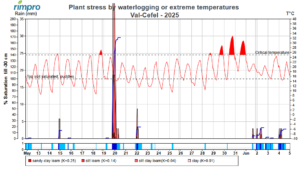
The plant stress model accounts for differences in soil water infiltration rates, which vary significantly depending on soil texture and structure. For instance, sandy soils typically have high permeability and allow rapid drainage, whereas clay soils have much lower infiltration rates and tend to retain water for longer periods, increasing the risk of waterlogging.
The model assumes a root zone depth of approximately 30 cm, which is representative of most high-density orchard systems. Within this root zone, the model estimates the risk of waterlogging by calculating the available air-filled pore space around the roots. Waterlogging stress condition, is associated with reduced root respiration, impaired nutrient uptake, and potential root hypoxia.
Stress due to high temperatures
Temperature stress is incorporated into the model based on physiological thresholds affecting plant function. When ambient air temperatures exceed 25°C, trees may begin to experience heat-related stress, particularly during periods of high radiation or limited water availability.
At elevated temperatures, plants respond by partially or fully closing their stomata in order to reduce transpiration losses. While this mechanism helps conserve water, it also limits CO₂ uptake, leading to a reduction in photosynthetic efficiency and overall carbon assimilation.
The model highlights all temperature values exceeding 25°C in red to indicate potential heat stress conditions. Prolonged exposure to these temperatures is associated with decreased growth rates, increased evapotranspiration demand, and in extreme cases, potential damage to leaf tissue and reduced yield performance.